
And how to spot them before they cost you a shipment
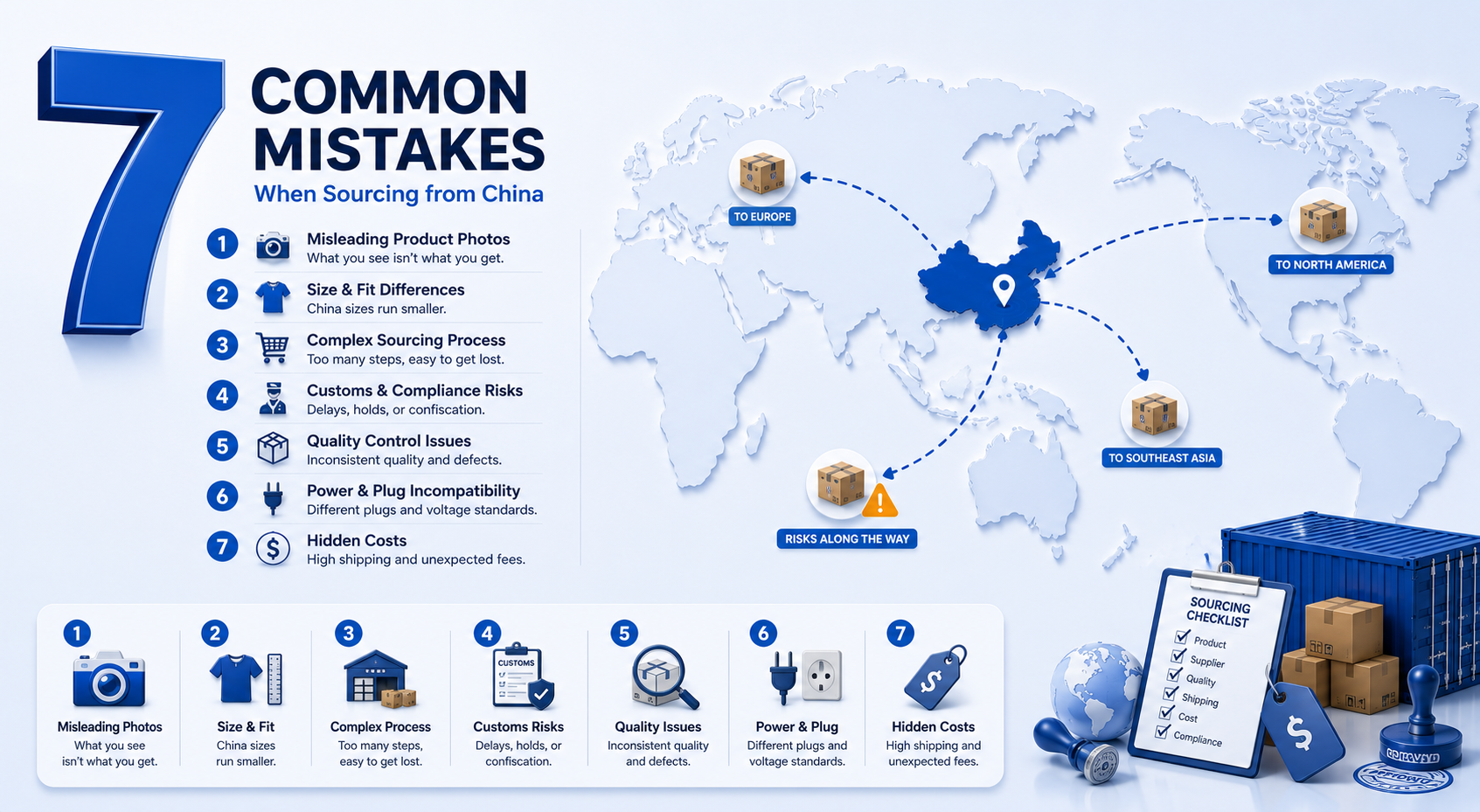
Sourcing from China opens up pricing and manufacturing options you simply can’t get anywhere else — but the supply chain, logistics, and platform conventions that make it work are built around domestic assumptions that rarely translate cleanly overseas. Every year, buyers who are new to this process run into the same handful of costly surprises: shipments that get held at customs, orders that arrive missing accessories, products that don’t fit or don’t power on. None of these mistakes come from bad luck. They come from a handful of gaps between how things work in China and what overseas buyers assume going in.
Below are the seven mistakes we see most often — what causes them, what they actually cost buyers, and what to check before you place your next order.
Mistake 1: Assuming Every Chinese E-Commerce Platform Ships Straight to Your Door
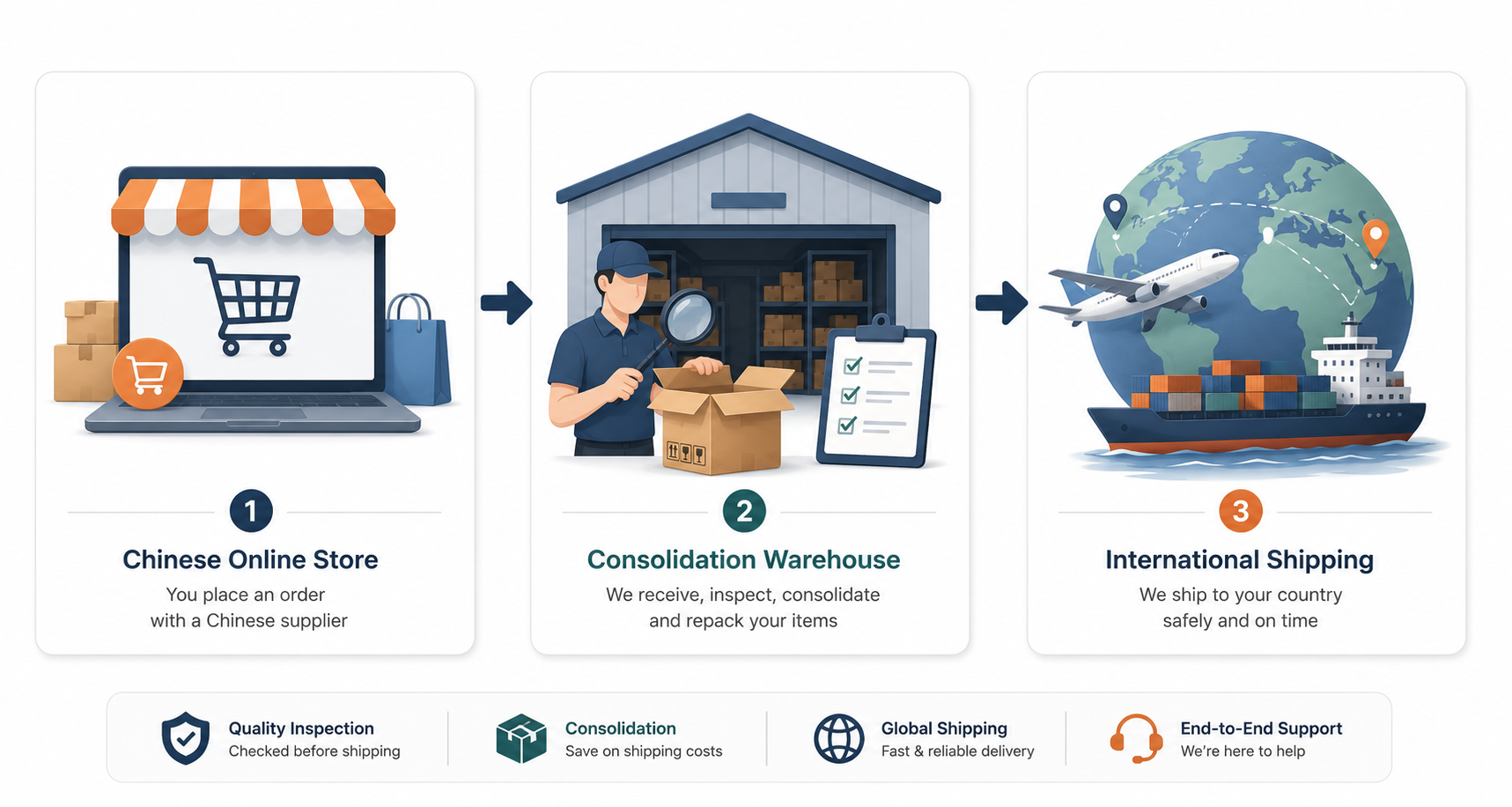
Most domestic Chinese e-commerce platforms aren’t built to ship internationally. In practice, the vast majority of orders first need to go to a designated consolidation warehouse inside China. From there, once the goods pass a quality check, the warehouse repackages and forwards the shipment to its final overseas destination. Skipping this step — or not knowing it exists — is where a lot of first-time buyers get stuck before they’ve even placed their first order.
Mistake 2: Ignoring Hidden Logistics Costs and Customs Compliance
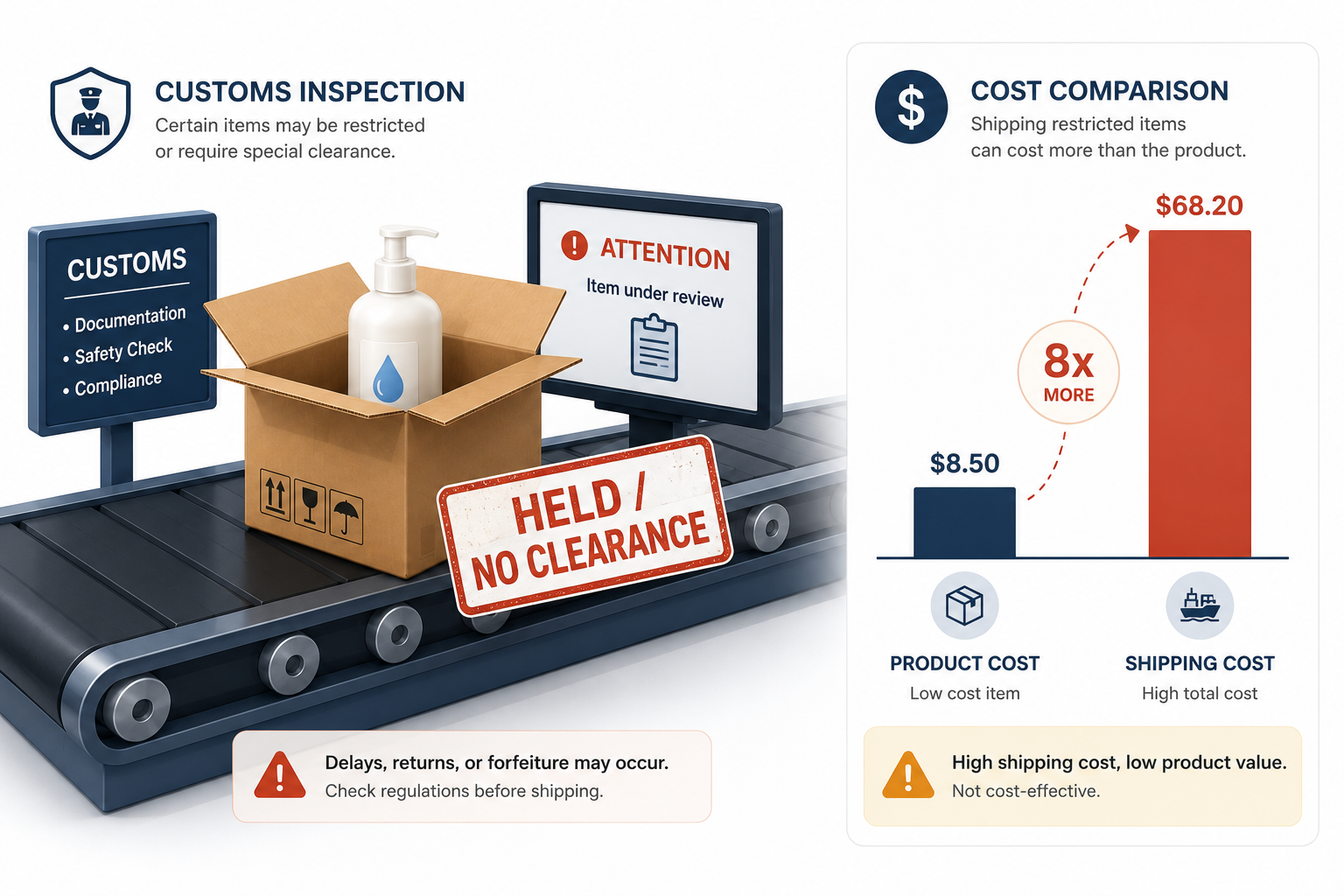
Low prices can be deceiving. Some products simply aren’t designed to travel — and buyers only discover this after they’ve already paid.
A real example: a U.S.-based buyer found automotive windshield washer fluid on 1688 at a very low price and ordered ten boxes, paying the domestic China shipping fee upfront. Once the goods reached the consolidation warehouse, it turned out there were very few shipping methods available for it at all. Liquids are treated as sensitive cargo, customs clearance is complicated, and international freight for this category can run tens to over a hundred times the value of the goods themselves. In the end, the shipment was held — and ultimately destroyed — at the destination country’s customs for lack of proper clearance documentation.
Mistake 3: Chasing the Lowest Price at All Costs
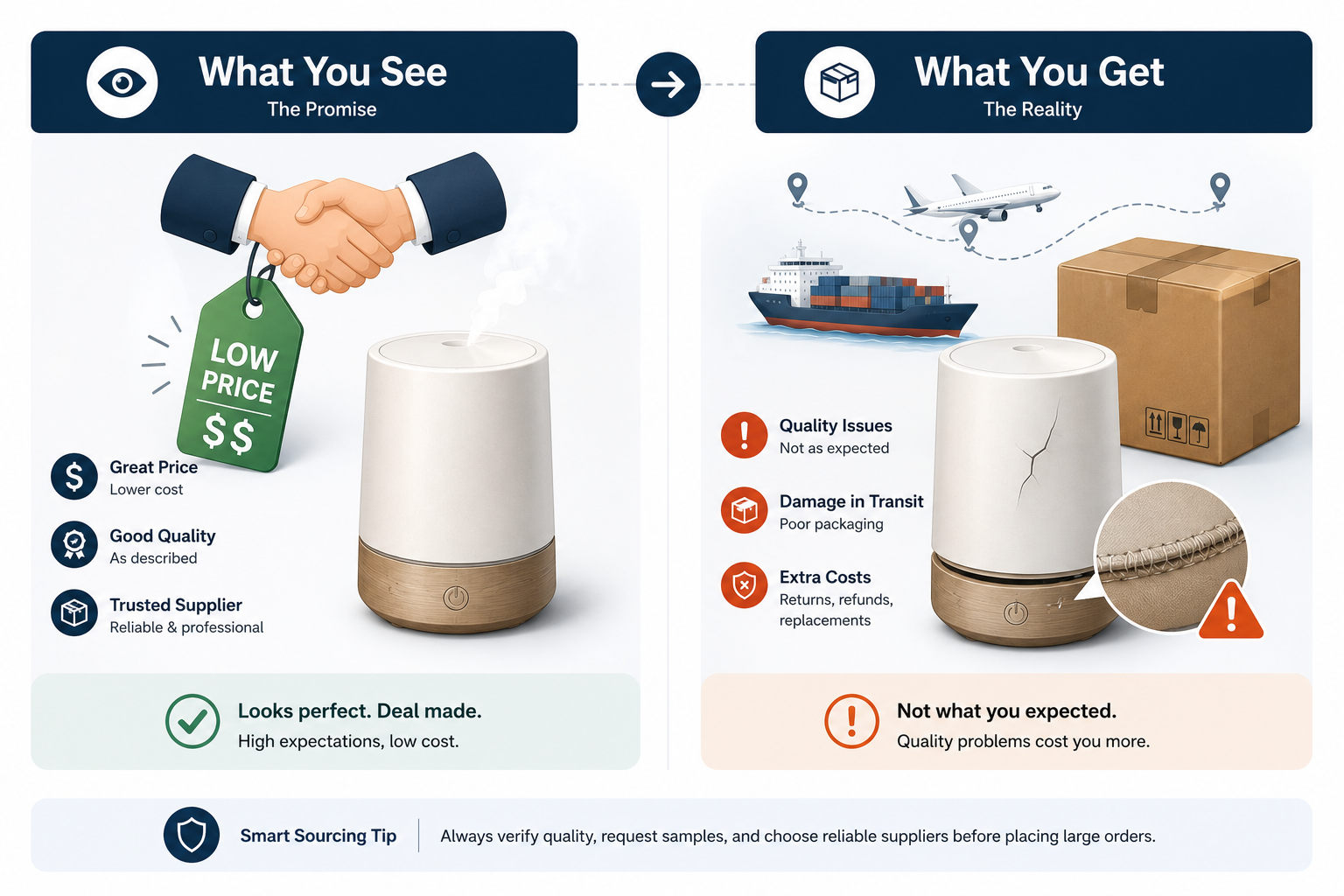
Some buyers, especially those who’ve picked up a bit of “China know-how” from friends, come in believing everything is negotiable — and end up haggling on price alone, picking whichever supplier quotes the lowest number. Here’s the reality: China’s manufacturing supply chain is extraordinarily mature, which means “you get what you pay for” plays out here in full force. A supplier will often agree to your rock-bottom price just to win the order — and then quietly cut corners somewhere you won’t notice until it’s too late.
Mistake 4: Confusing White-Label/Dropshipping With Custom Manufacturing
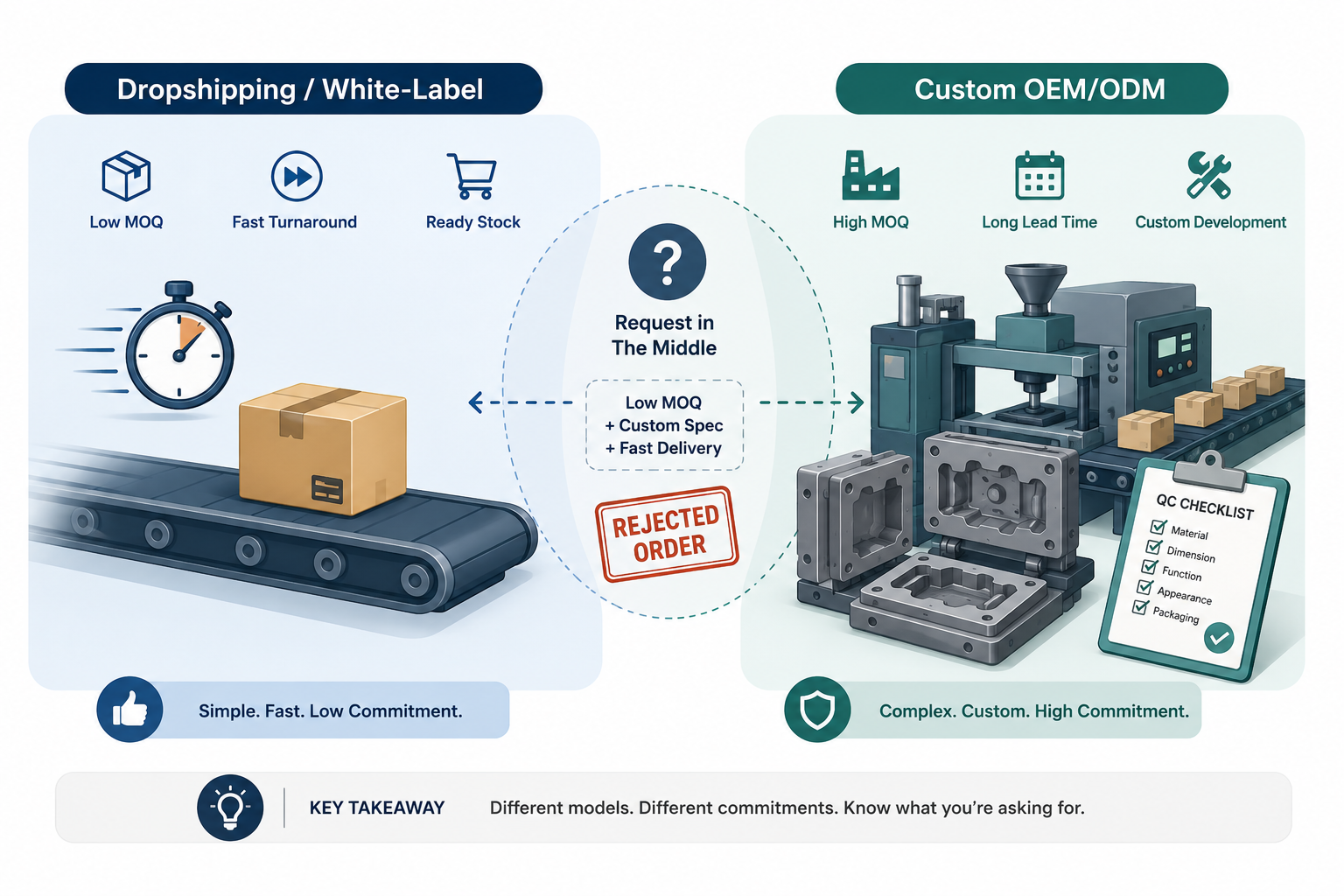
Many small sellers and independent creators building their own merch line or DTC brand don’t fully understand the difference between supply chain models. A lot of overseas buyers come in with dropshipping-level expectations — no minimum order, ship-on-demand — but ask factories to execute complex, fully custom OEM/ODM work. Or they go the opposite direction: expecting an extremely low minimum order quantity while also demanding changes to the product’s core structure or components.
The cost of this mismatch is steep. Communication drags on endlessly. Factories either turn the order down outright, or reluctantly accept it and deliver a custom result that’s rough around the edges. Understanding where standard white-label sourcing ends and true bulk OEM customization begins is essential before you ever request a quote.
Mistake 5: Assuming Everything Shown in the Photo Is Included
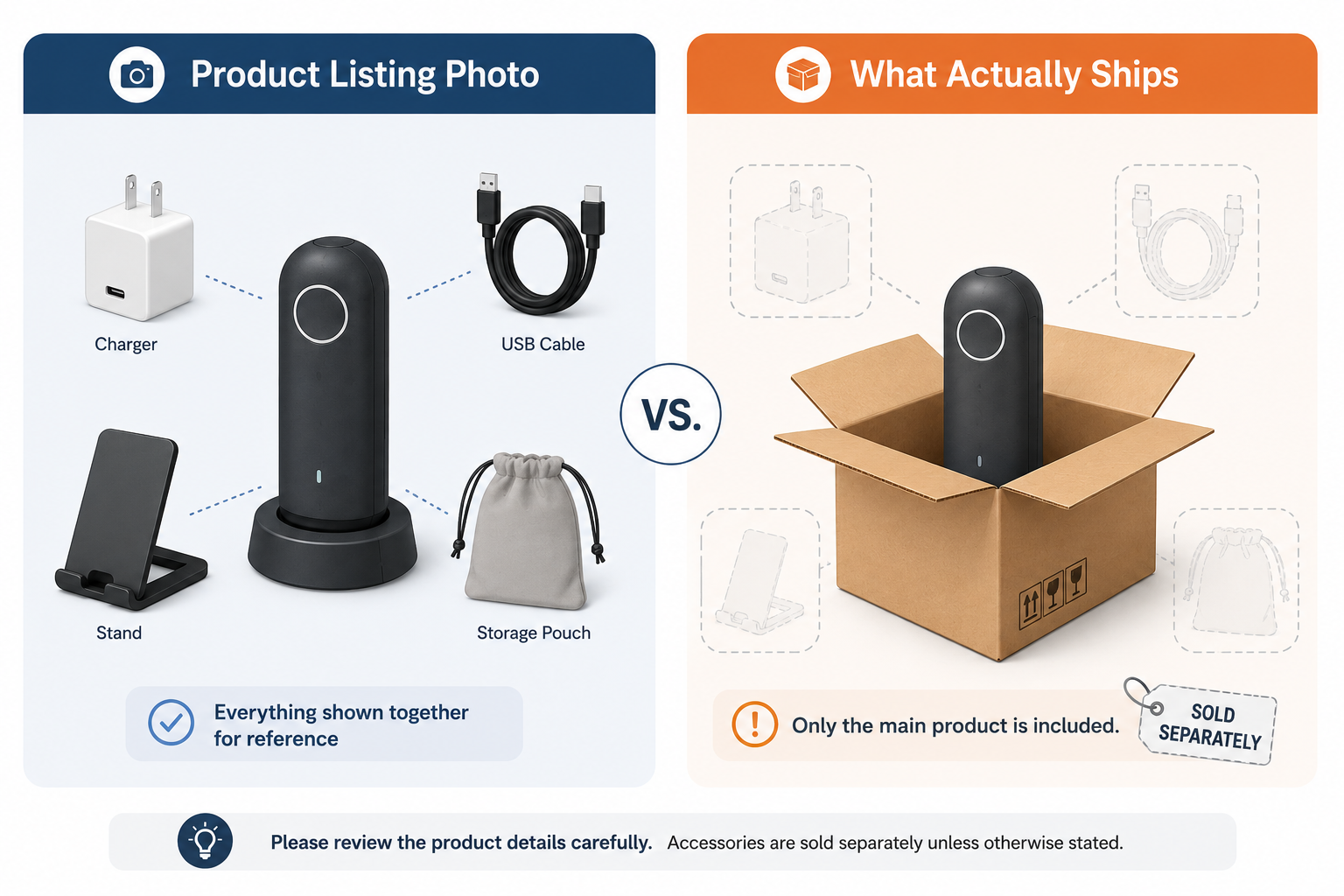
On most Western platforms, if an accessory appears in the product photo, it’s basically guaranteed to be in the box. Chinese sellers often work differently — main images frequently show optional add-ons, gift items, or styling props alongside the product, and those extras are only included with specific SKU variants. Overseas buyers who order based on the photo alone often open their package to find just the standalone item — no charger, no stand, no cable, no storage pouch — and conclude the seller misled them. Even phrases like “standard version does not include battery” get lost in translation: buyers assume it just means no spare battery, when in fact the unit ships with no power source at all.
Mistake 6: Applying Western Sizing and Material Standards to Chinese Products
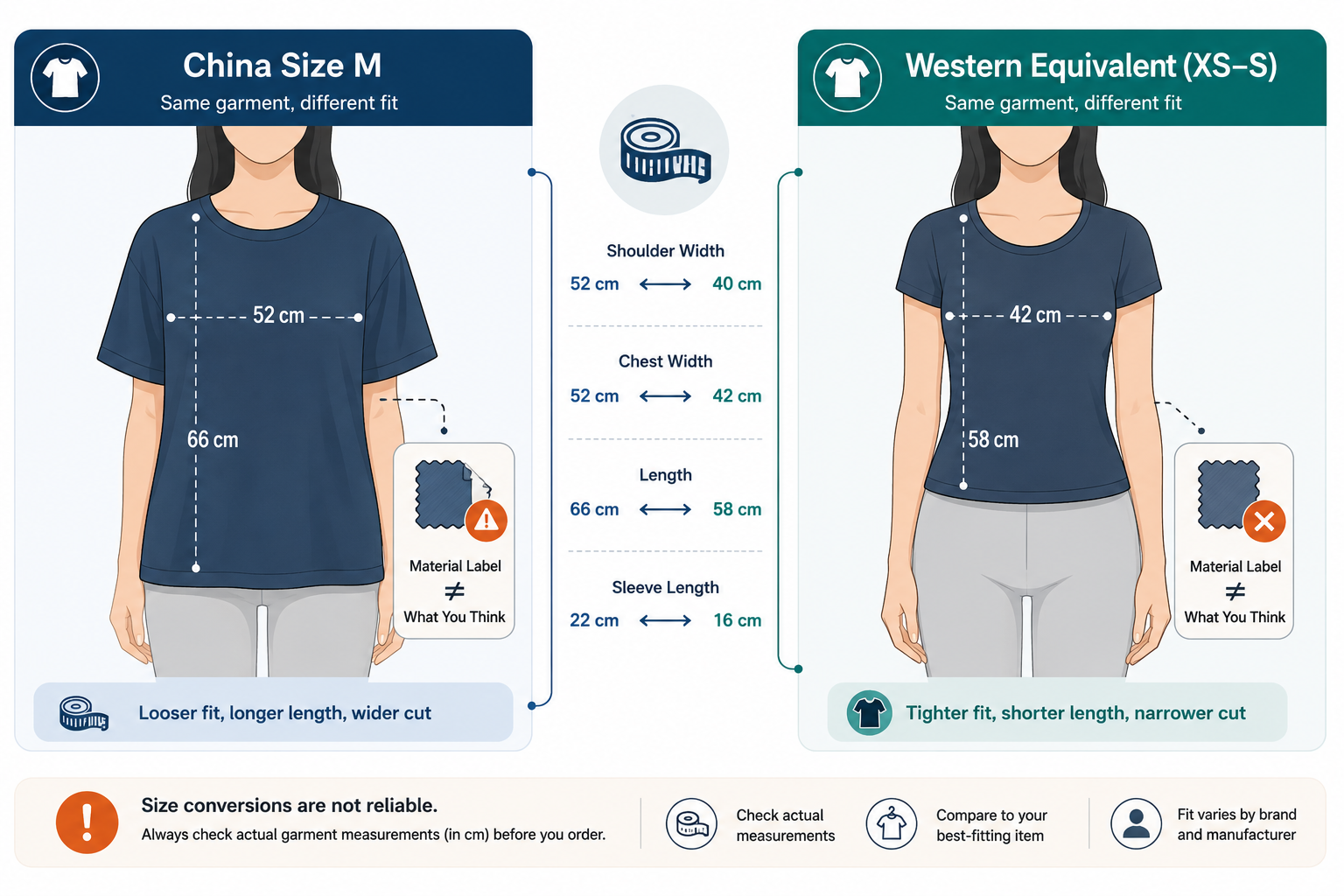
Chinese apparel sizing doesn’t map directly onto Western sizing — a Chinese size M is roughly equivalent to a Western XS–S. Product listings usually give measurements in centimeters only, and translation tools won’t flag the sizing gap between the two systems. Fabric descriptions using casual domestic terms like “thickened,” “standard,” or “upgraded” translate into vague, unhelpful English. Overseas buyers often glance at the S/M/L label and skip the centimeter measurements entirely, ending up with a product that fits nothing like expected. On top of that, Chinese terms like “faux leather,” “thickened polyester,” or “alloy” often get machine-translated in ways that make buyers assume they’re getting genuine leather, stainless steel, or similar premium materials — when they aren’t.
Mistake 7: Assuming Products Are Pre-Configured for Your Country’s Voltage and Language
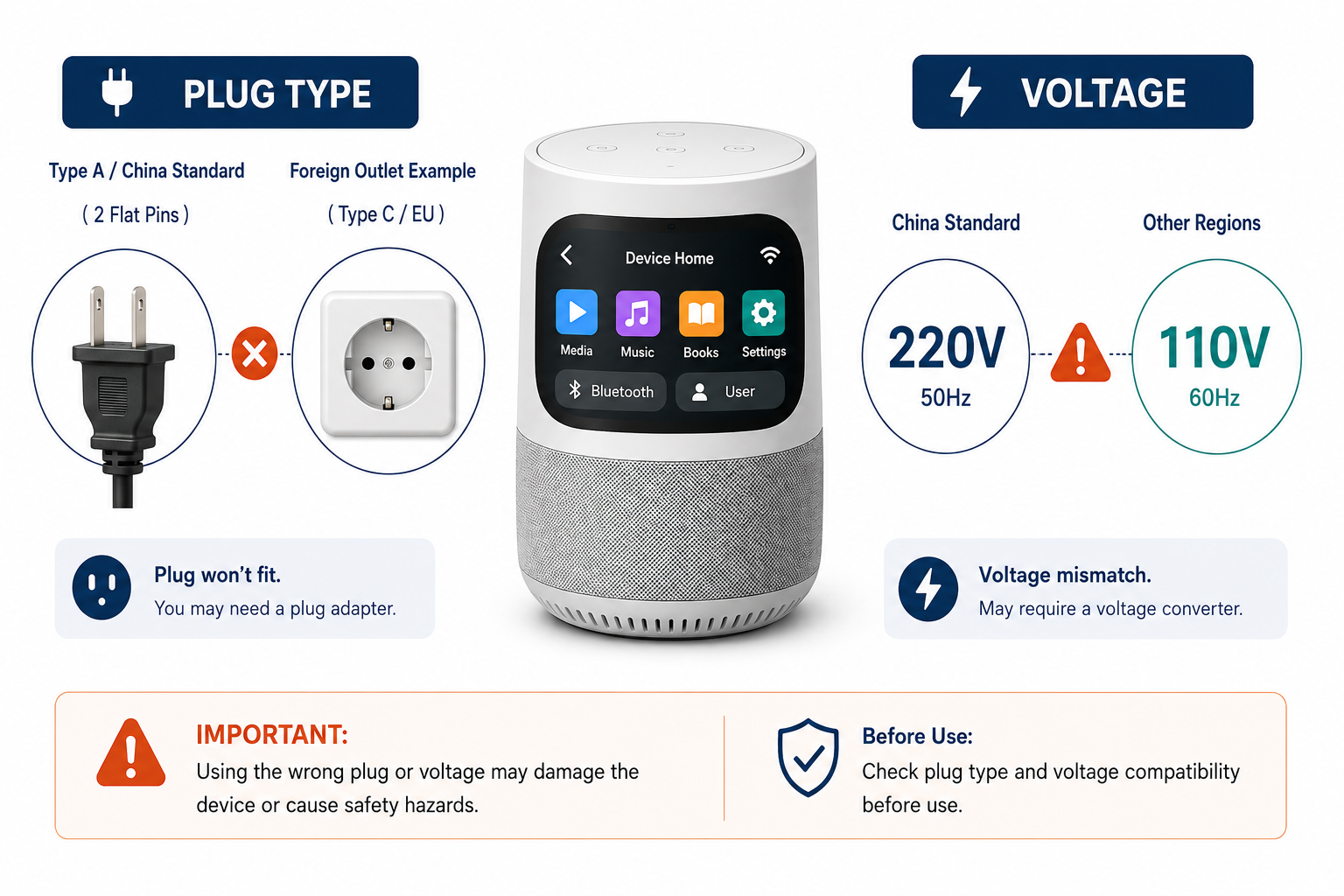
Domestic Chinese electronics default to 220V and Chinese-language firmware. Overseas buyers often assume the product will simply work out of the box — plug into a local outlet, boot up in English. In reality, smart home devices, toys, and projectors frequently ship with Chinese-only interfaces, and standard Chinese plug types don’t fit sockets abroad.
The Common Thread
Every one of these mistakes comes down to the same root cause: assuming that what’s true for domestic Chinese shoppers is also true for overseas buyers. It usually isn’t — not the shipping route, not the packaging conventions, not the sizing charts, not the plug in the wall. None of this makes sourcing from China riskier than it’s worth; it just means the process rewards buyers who ask the right questions upfront rather than the ones who find out the hard way.
If you’re building out a sourcing or fulfillment process and want a second set of eyes on where a shipment might run into trouble before it ships, that’s exactly the kind of groundwork GullTrans helps freight forwarders and consolidation partners get right from the start.