How Purchasing Agent Works: The Business Model Powering China’s Global Shopping Agents
How Purchasing Agent Works: The Business Model Powering China's Global Shopping Agents BLOG
How Purchasing Agent Works:
The Complete Guide for Agents, Sellers & Entrepreneurs
Overseas buyers want access to China’s near-wholesale prices. Purchasing agents make it possible. Here’s how the model works — and how to build a real business around it.
What Is a Purchasing Agent?
A purchasing agent — also known in Chinese e-commerce circles as part of the reverse daigou model — is a person or business that sources products from Chinese platforms like 1688, Taobao, or Pinduoduo on behalf of overseas buyers, then handles international shipping to get those goods delivered abroad.
This is the opposite direction from traditional daigou, where Chinese consumers paid agents to bring foreign-branded goods — think luxury bags from Paris or supplements from the US — back into China. The purchasing agent model runs in reverse: Chinese manufacturing output flows outward, reaching buyers in Europe, Southeast Asia, the Middle East, and beyond.
It’s not a new concept, but the infrastructure to run it professionally — proper storefronts, automated procurement, warehouse management, carrier integrations — is now mature enough that it’s become a serious and scalable business category.
Why This Model Is Gaining Traction
The opportunity sits in a simple price gap — and it’s a large one.
3–8× Price Advantage
A product on 1688 priced at $3–8 can retail for $25–60 on Amazon or in European stores. Same factory. Sometimes the same SKU. Purchasing agents capture value in that gap.
“The demand isn’t the problem. Overseas buyers already know Chinese platforms have what they want. The friction is execution — language, payment, logistics, trust.”
Three structural factors are making purchasing agent businesses easier to build now:
Platform API Access
1688 and Taobao now provide formalized API infrastructure, enabling programmatic catalog integration rather than manual browsing and copy-pasting.
Growing Buyer Comfort
Buyers across Southeast Asia, the Middle East, and Eastern Europe are increasingly comfortable ordering through China-based purchasing agents.
Mature SaaS Tooling
End-to-end platforms now handle warehousing, customs documentation, and carrier integrations — no need to build from scratch or rely on fragile workarounds.
The Full Business Chain
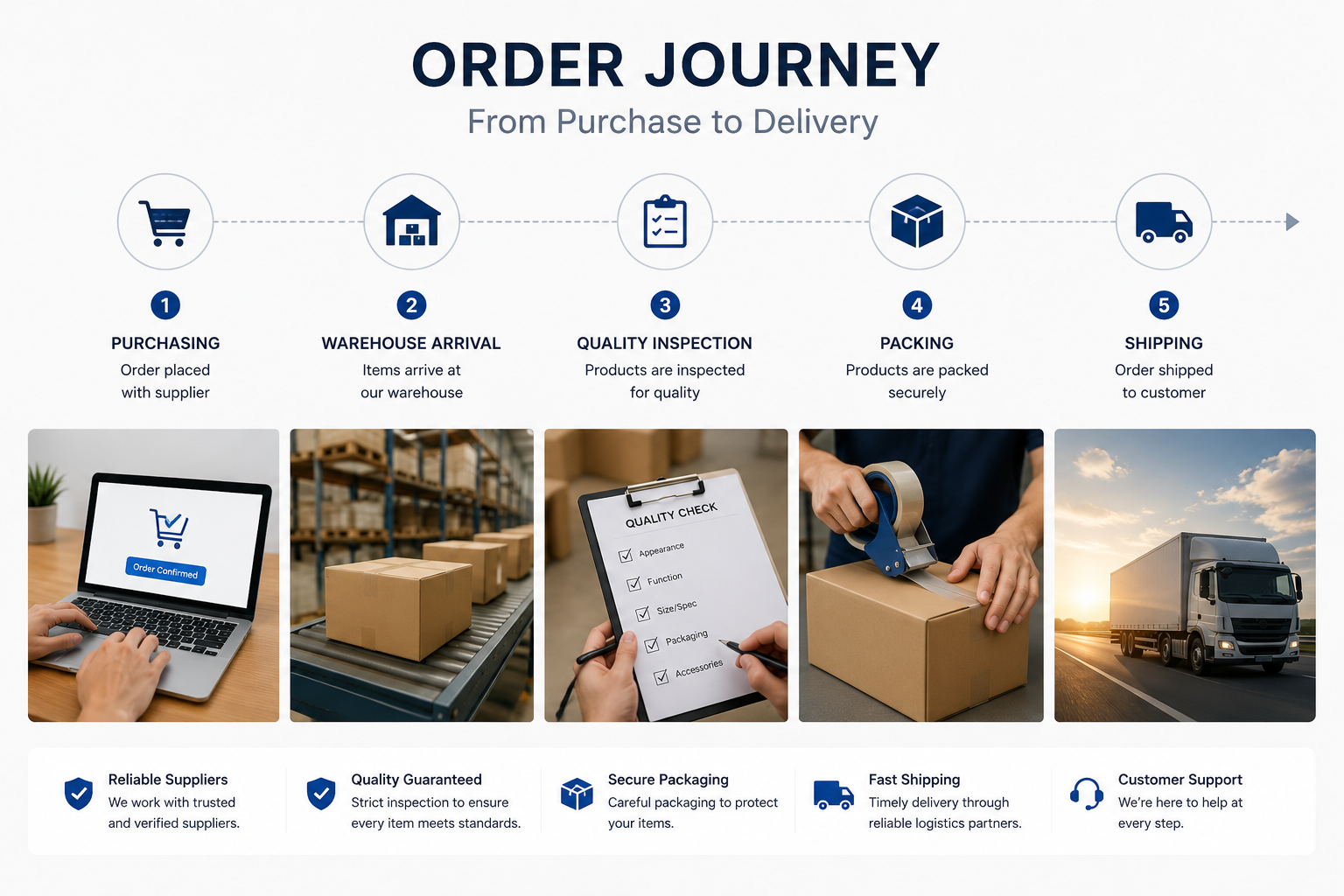
Running a purchasing agent operation involves more moving parts than it looks like from the outside. Here’s the complete chain from product discovery to buyer delivery:
Sourcing & Catalog
The agent needs access to product listings — either by manually searching 1688 or Taobao, or by connecting to an API that pulls live inventory, pricing, and images. The latter is the only way to scale beyond a small number of daily orders.
Customer Storefront
Buyers need somewhere to browse and place orders — a website, mobile app, or other channel. Multi-language and multi-currency support is non-negotiable for international buyers. A poor storefront experience is often the single biggest reason purchasing agent businesses fail to retain customers.
Procurement Execution
Once an order comes in, someone — or something — needs to purchase the item from 1688 or Taobao. Manual procurement caps your volume fast. Automated purchasing with tracking numbers fed back to the buyer automatically is the operational baseline for any serious purchasing agent business.
China Warehouse
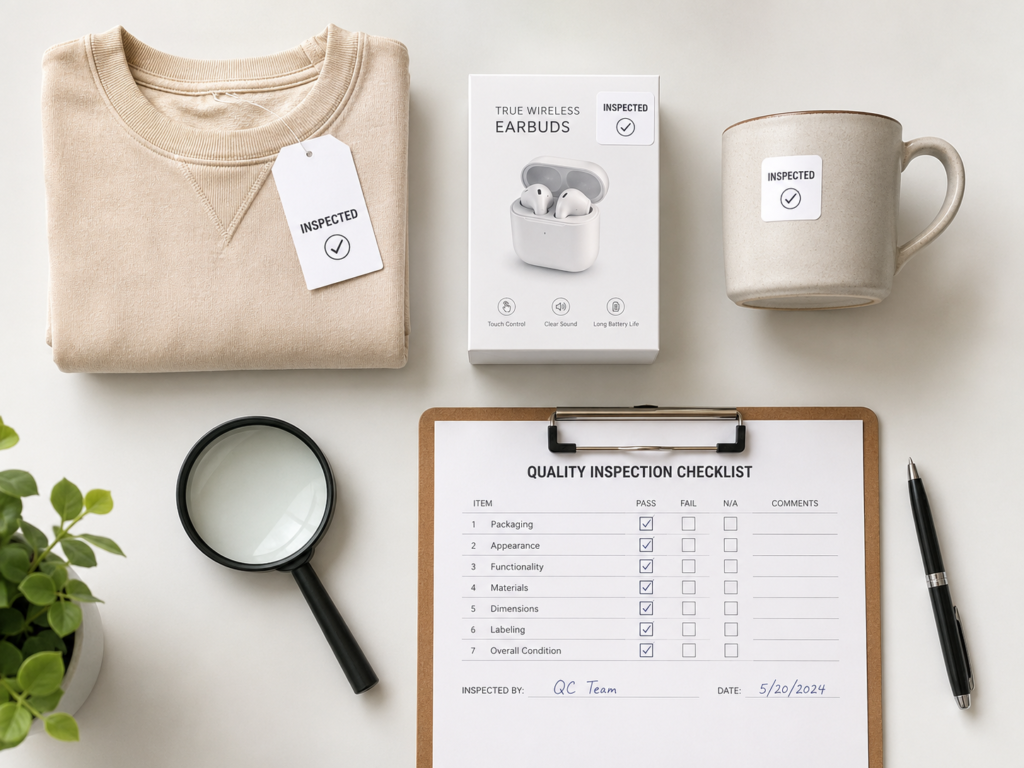
Goods from multiple suppliers arrive at a China-based warehouse. Inspection, photography, consolidation, and repackaging happen here before international dispatch. This is the operational core — warehouse efficiency directly determines your margin and your customer experience.
International Shipping
Consolidated packages go out via international carriers. Carrier selection, rate comparison, customs documentation, and tracking visibility all need to be managed centrally. Most serious operations maintain relationships with multiple carriers to optimize by destination and parcel weight.
After-Sales
Disputes, lost packages, quality issues. A system for handling these at scale — without eating into margins through manual resolution — separates sustainable purchasing agent businesses from ones that burn out within a year.
How Each Type of Operator Enters This Business
🛒 If you’re an overseas e-commerce seller
You probably already have demand — customers who want products you can’t source cheaply enough locally. Connecting your storefront to a China-based product catalog via API lets you access near-wholesale pricing without building sourcing or warehousing infrastructure yourself. The key is a platform that offers both the catalog API and warehouse partner connections, so you keep your margins without taking on operational risk.
💬 If you’re already doing informal purchasing agent work
You’re likely handling orders manually — messaging apps, bank transfers, spreadsheets. The ceiling on this is low and the error rate is high. Systematizing with a proper platform lets you take on more clients, reduce mistakes, and build a storefront experience that retains customers rather than relying entirely on personal relationships.
⚙️ If you’re a developer or tech-enabled business
The interesting play here is API-first. Rather than building your own sourcing relationships and warehouse operations from scratch, you integrate with a platform that exposes product data, order submission, and fulfillment status via API. You focus on your customer-facing product; the purchasing agent backend runs on proven infrastructure.
🚀 If you’re evaluating this as a new business
The barrier to entry is lower than it looks, but the operational complexity is higher than most people expect. Businesses that work pick a focus — a specific buyer geography, product category, or customer segment — and build the right tooling before scaling. Starting with a purpose-built SaaS platform rather than cobbling together custom tools is almost always the right call.
The Infrastructure Layer: What Serious Operators Use
At a certain point, the difference between a side hustle and a real purchasing agent business comes down to systems. Operators running at scale — hundreds of orders per day, multiple destination countries, warehouses processing thousands of SKUs — are on purpose-built SaaS platforms, not spreadsheets.
What that infrastructure typically includes:
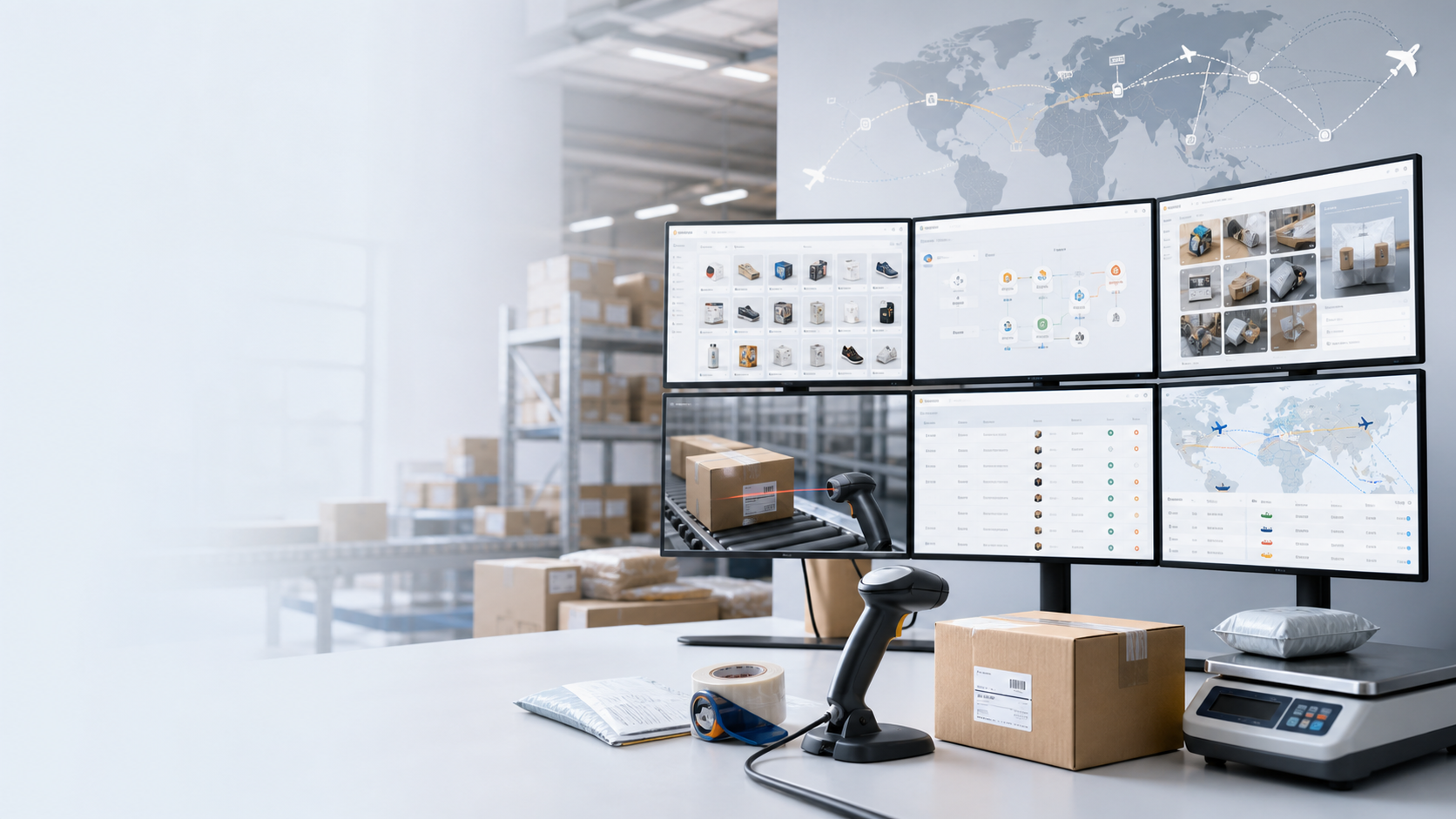
WMS + Hardware (Scale · Scanner · Camera)
50+ Carrier Network + Rate Comparison
Open API + Marketing & Referral System
Official platform integrations: Direct API connections to 1688 and Taobao for live product data and automated purchasing — not screen scraping, which is fragile and breaks frequently.
Multi-storefront capability: PC, mobile, and app storefronts with multi-language and multi-currency support — white-labelable for different markets.
WMS with hardware integration: Tracks every item from inbound receipt through outbound dispatch, with physical connections to scales, barcode scanners, cameras, and dimensioners.
Carrier network: 50+ international carriers with rate comparison, label generation, and unified tracking — optimized by destination and parcel weight.
Open API + growth tools: Referral systems, loyalty points, and coupon mechanics that turn buyers into a growth channel — plus API access for operators building on top of the platform.
This is the category that GullTrans operates in.
GullTrans is a purpose-built SaaS platform for purchasing agent and reverse daigou businesses — with 700+ enterprise clients and six years of operational history in this specific market. It’s built around the 1688, Taobao, and Pinduoduo ecosystems, with official platform partnerships that make automated purchasing and catalog access reliable rather than fragile.
For e-commerce sellers looking for API access to Chinese product catalogs, for agents wanting to systematize existing operations, or for developers building on top of China-sourced fulfillment — it’s one of the few platforms purpose-built for exactly this use case.
Ready to Build a Real Purchasing Agent Business?
Whether you’re systematizing an existing operation, connecting your storefront to Chinese supplier catalogs via API, or starting from scratch — the infrastructure exists to do this professionally.
700+ enterprise clients · 6 years in the industry · Official 1688 & Taobao partner