How to Start a 1688 & Taobao Purchasing Agent Business in 2026
How to Start a 1688 & Taobao Purchasing Agent Business in 2026 BLOG

How to Start a 1688 & Taobao Purchasing Agent Business in 2026
The operations playbook that separates agents doing $10K/month from those stuck managing WhatsApp messages and spreadsheets.
Updated May 2026
By Haiou SaaS Team
Why 2026 Is the Right Time to Start
Every week, millions of people outside China search for products they’ve seen — on social media, in stores, from friends — knowing they were made in China. They want them. They just don’t know how to get them reliably.
That gap is your business.
The demand for Chinese goods globally has never been higher, but the infrastructure to fulfill it — reliably, professionally, at scale — is still being built. The agents doing this well right now aren’t technical wizards. They’re operators who figured out the right systems early.
The window for early movers in markets like Central Asia, Southeast Asia, the Middle East, and Eastern Europe is still wide open. Agents who build proper operations now will be very difficult to displace in 2–3 years.
“The agents who win aren’t the ones with the best connections in China. They’re the ones whose customers trust them most.”
What a Purchasing Agent Actually Does
A purchasing agent — also called a sourcing agent or consolidation agent — sits between Chinese suppliers and overseas buyers. Your job is to make buying from China feel effortless for your customers.
In practice, that means:
- Product access — Giving customers a way to browse and order products from Chinese platforms (1688, Taobao, Tmall)
- Procurement — Actually buying the goods from Chinese suppliers on behalf of your customers
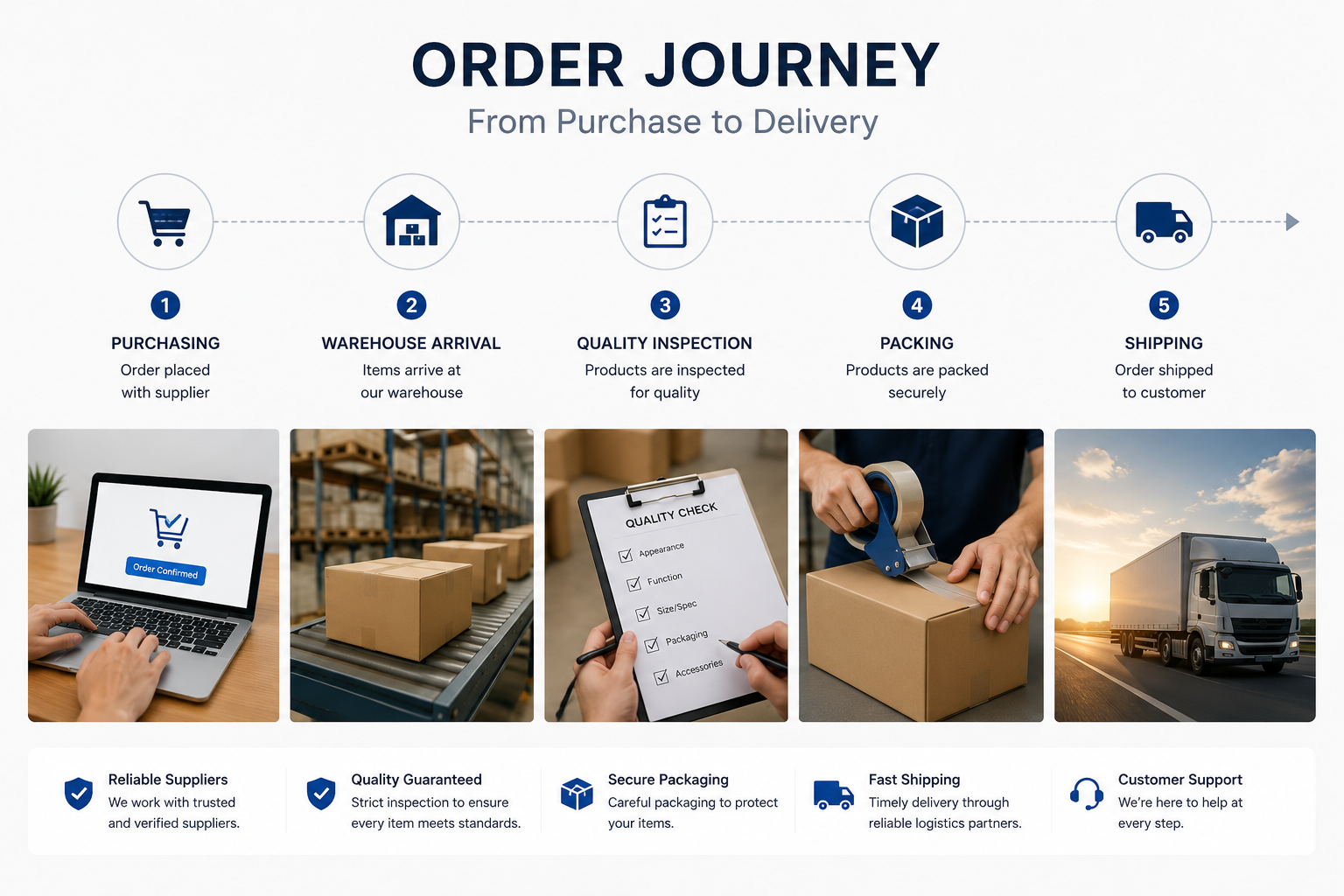
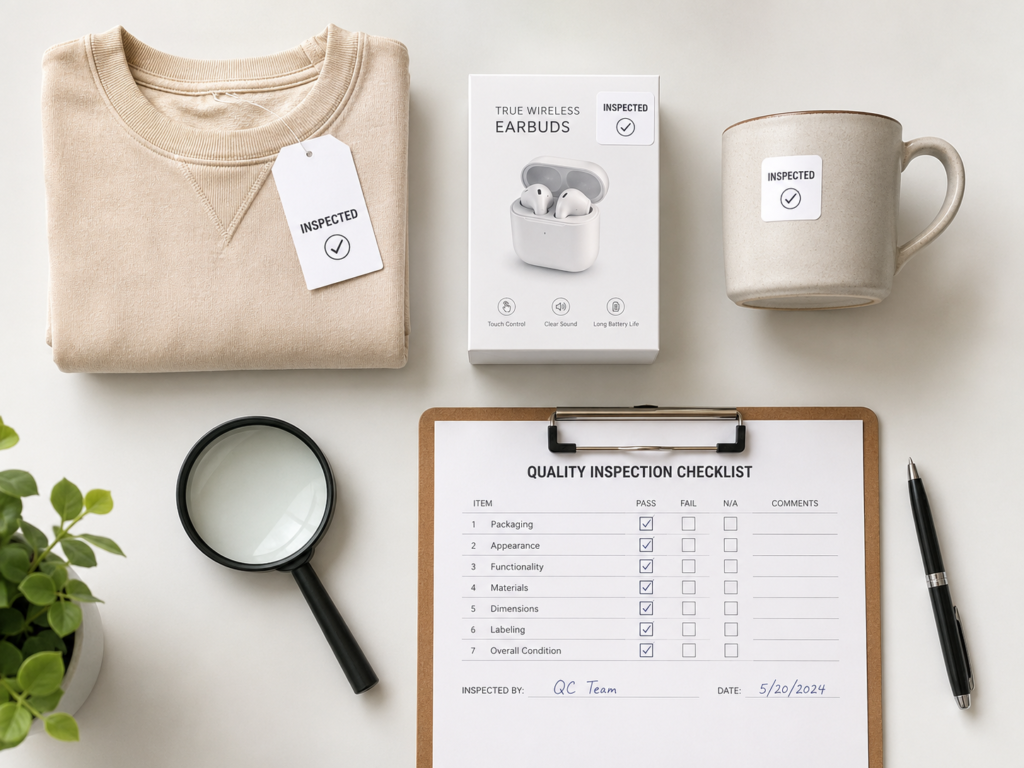
- Warehousing — Receiving parcels at your China warehouse, inspecting them, storing them
- Consolidation & shipping — Combining multiple orders, packaging, and sending to the customer’s country
- Customer service — Handling queries, updates, and issues throughout the journey
Your customers might be individual end consumers who want specific Chinese products. Or they might be dropshippers who use you as their fulfillment backend — they sell, you source and ship. Either way, your value proposition is the same: you make China accessible.
The 4 Things You Need to Run This Business
Before we get into the full operational flow, it helps to understand the four foundational capabilities every successful purchasing agent needs. Miss any one of them and you’ll hit a ceiling — or a crisis — fast.
Customers need somewhere to browse products, place orders, and track their shipments. In their language. In their currency. On their phone.
You need a consistent way to purchase from 1688 and Taobao — accurately, quickly, and with proper tracking handed back to the customer.
Parcels arrive from multiple suppliers. They need to be received, inspected, linked to the right customer order, and stored properly until shipping.
Getting parcels to 50+ countries, with real tracking updates, at competitive rates, without losing things — this is where most agents underinvest.
Most agents start by solving one or two of these well, then scramble as they grow. The smarter move is to build all four from the beginning — even at small scale — so your operations don’t collapse when volume picks up.
The Complete Fulfillment Flow — All 23 Steps
Here’s what a professional purchasing agent operation looks like end-to-end. This isn’t a simplified overview — this is the actual flow, from the moment a customer opens your website to the moment their parcel lands at their door.
From product search to doorstep delivery. All in one platform.
Let’s walk through each phase.
💡 Multi-language + live exchange rates = fewer abandoned sessions
💰 You set the markup. Every product, every category.
💡 Full pricing control: shipping, fees, coupons, exchange rates — all yours.
💡 Catch problems before purchase, not after. Protect your margins.
✅ Authorize once. Procurement runs itself.
✅ Zero manual data entry. Zero tracking errors.
✅ One scan. Zero manual lookup.
💡 Catch wrong items at inbound, not at the customer’s door.
✅ Hardware-connected: scale + camera + dimensioner, all automatic.
💡 Customer visibility at every stage = fewer “where is my order?” messages.
💰 Consolidation = bigger average order value per shipment.
💡 Video of packing = near-zero disputes about package condition.
💰 Two-payment model protects you from unpaid shipments.
✅ 50+ carrier integrations. Tracking synced automatically.
💡 Real-time tracking on your platform = your brand, not the carrier’s.
The 3 Mistakes That Kill Most Agents
Most purchasing agents who fail don’t fail because of the market. They fail because of operations. Here’s what it actually looks like when things go wrong.
How the Top Agents Actually Run Their Operations
The purchasing agent businesses that are doing serious volume — $100K+/month, multiple staff, serving thousands of customers — share a few things in common. None of it is magic. All of it is operational discipline.
They also use hardware in the warehouse — barcode scanners, connected scales, dimensioning equipment — so that every parcel that comes in and goes out has accurate records. This isn’t expensive at the scale where it matters. It’s table stakes.
“The difference between a $10K/month agent and a $100K/month agent isn’t the product. It’s the system behind the product.”
Haiou SaaS is the platform that powers this kind of operation. It gives purchasing agent businesses — consolidation companies, forwarding agents, sourcing businesses — the complete infrastructure to run professionally from day one: customer storefront (web + mobile app), back-office management, warehouse software (WMS), hardware integrations, procurement automation, and 50+ carrier connections.
Over 700 businesses across the world use it to run their China-sourcing operations. Clients like SAHIY — a purchasing agent business serving buyers across Central Asia — built their entire customer operation on top of it.
How to Get Started
If you’re serious about building a purchasing agent business in 2026, here’s the honest answer on sequencing:
- Decide your market. Who are your customers — individual buyers, dropshippers, local retailers? What country are you serving?
- Get a China warehouse partner. You need a physical location in China to receive goods. This can be your own or a shared warehouse through the platform.
- Set up your storefront and back-office. Your customers need a professional way to browse, order, and track — from day one.
- Establish your procurement process. Link your 1688 account. Set your pricing markup. Define your service fees.
- Choose your shipping channels. Work out which carriers serve your destination market competitively and integrate them.
- Run your first 10 orders manually alongside the system. Learn the flow before you scale it.
The businesses that succeed at this aren’t the ones who spend 6 months planning. They’re the ones who get the right infrastructure in place early — and start learning from real customers as fast as possible.
Ready to build your purchasing agent business?
Talk to our team. We’ll walk you through the complete platform — storefront, warehouse, procurement, and international delivery — and help you figure out the right setup for your market.