
Sourcing Systems · API Integration
For teams that already have a website or app and just want to plug in 1688’s purchasing and logistics capabilities on the backend.
Most teams reach this point with the hard part already done. The website is live, the app is built, users are showing up. The one piece still missing is the backend layer: actually connecting to 1688’s purchasing and logistics capabilities, instead of relying on someone manually placing orders, manually checking stock, and manually chasing shipping updates every day.
The problem is that plenty of services advertise “1688 API integration,” and it is only after you connect one that you realize being able to look up a product and being able to run your entire operation on it are two very different things.
“Does it have an API” is the wrong question
The right question is whether it can carry your actual business volume. A lot of what gets called a 1688 API is really a thin wrapper, useful for pulling product information and not much else. Whether you can actually scale your purchasing on top of it comes down to two other things: how complete the product data is, and whether ordering and order status can genuinely be managed by your system, rather than by a person watching a screen.
Start with the product data
The first thing worth checking is coverage. If an API only reaches 1688 and can’t touch Taobao, Tmall, or Weidian, you’re boxed in the moment you want to expand categories or find a better supplier elsewhere. A good product API should bring all of these sources together, instead of forcing you to integrate a separate service for each platform.
The second thing is completeness. Images, descriptions, specifications, SKU variations like color and size, price, stock, and seller information should all come through in one call, not just a title and a hero image with everything else left for you to fill in manually. Incomplete data shows up as a worse experience on your own site or app, where what a user sees doesn’t match what they get at checkout.
The third thing is the one most often overlooked, and it’s the one with the most direct impact: whether price and stock update in real time, or only sync every few hours, or once a day. This sounds minor until it isn’t. If pricing and inventory aren’t live, your platform might show something in stock at a discounted price, and the customer only finds out after placing the order that the supplier already raised the price or ran out. That gap is the kind of thing that quietly kills trust.
Then look at ordering and order status
This is where “works” and “actually useful” start to diverge. First, can orders be created directly through the API? If not, your team is still exporting product and order data and placing each order manually on 1688’s own backend, one at a time, and the integration hasn’t removed the part of the job that actually eats time.
Next, is automatic purchasing supported? Once an order comes in, can the system place it without someone clicking through a manual confirmation each time? This is the step that actually frees a team from babysitting orders instead of building the product.
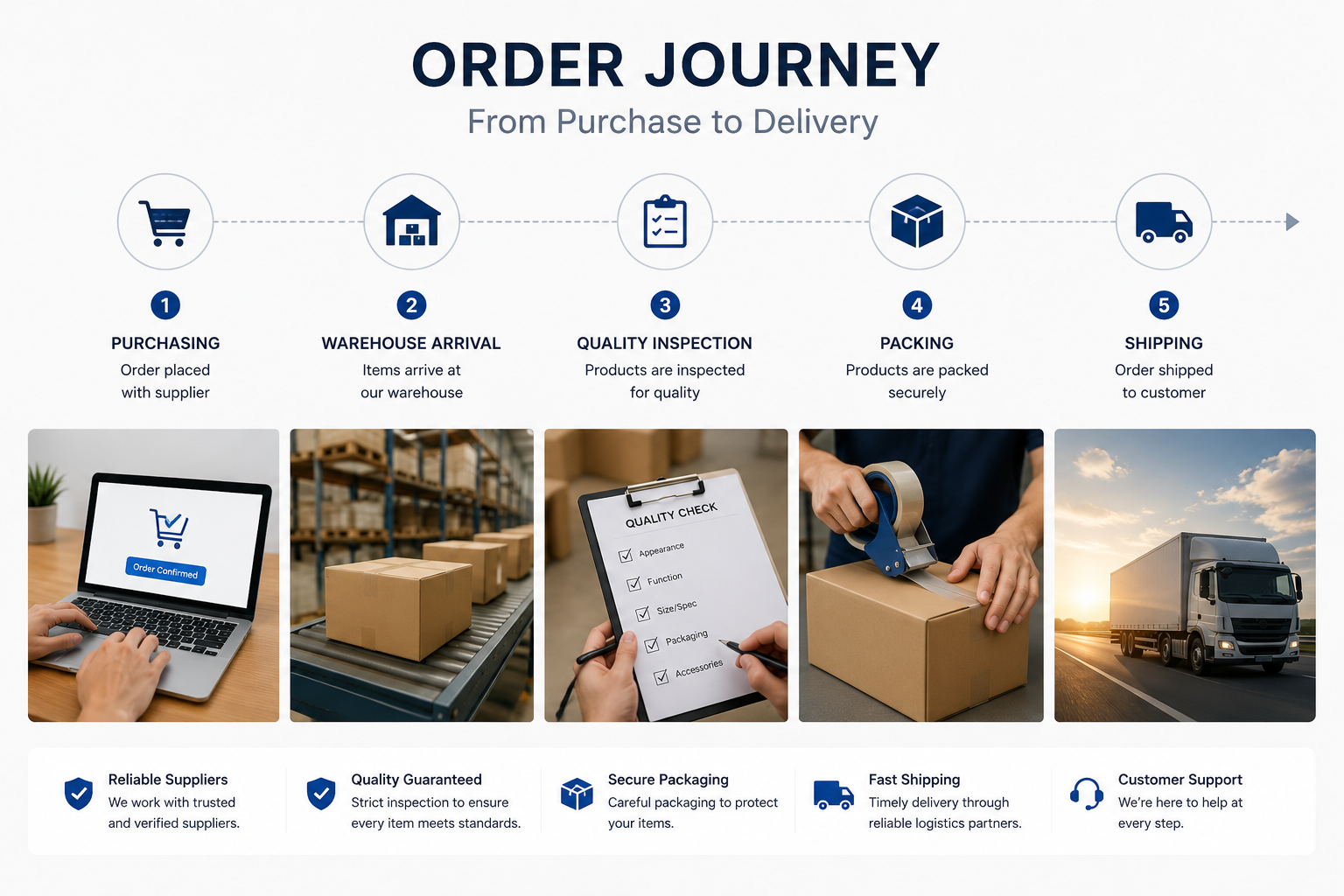
Last, and easy to underestimate, is whether every stage of an order can be monitored: purchasing, warehouse arrival, quality inspection, packing, and shipping, rather than a single vague “processing” status that tells you nothing. Without this, everything downstream falls back on manual work, support staff checking in on each order one by one to answer “where is it” and “was there a problem,” and that labor cost only gets harder to absorb as the team scales.
For a team that already has a website and an app, this is the layer that actually matters: it turns a purchasing process that only ran on manual effort into one your system can run on its own, so your team’s time goes back into the product and the people using it.
Closing thought
If you already have the website and the app, and the only piece missing is this backend layer for purchasing and logistics, it’s worth taking the time to ask these questions before deciding who to integrate with. This is also the part of our API at Haiou SaaS that we keep refining: whether product data, ordering, and full order-status visibility genuinely connect end to end is the standard we hold our own product to, and hopefully a useful one for evaluating anyone else’s.