
Sourcing & Quality Control
What actually counts as a defect, how compensation is calculated, and why “we’ll take care of it” is not a quality standard.
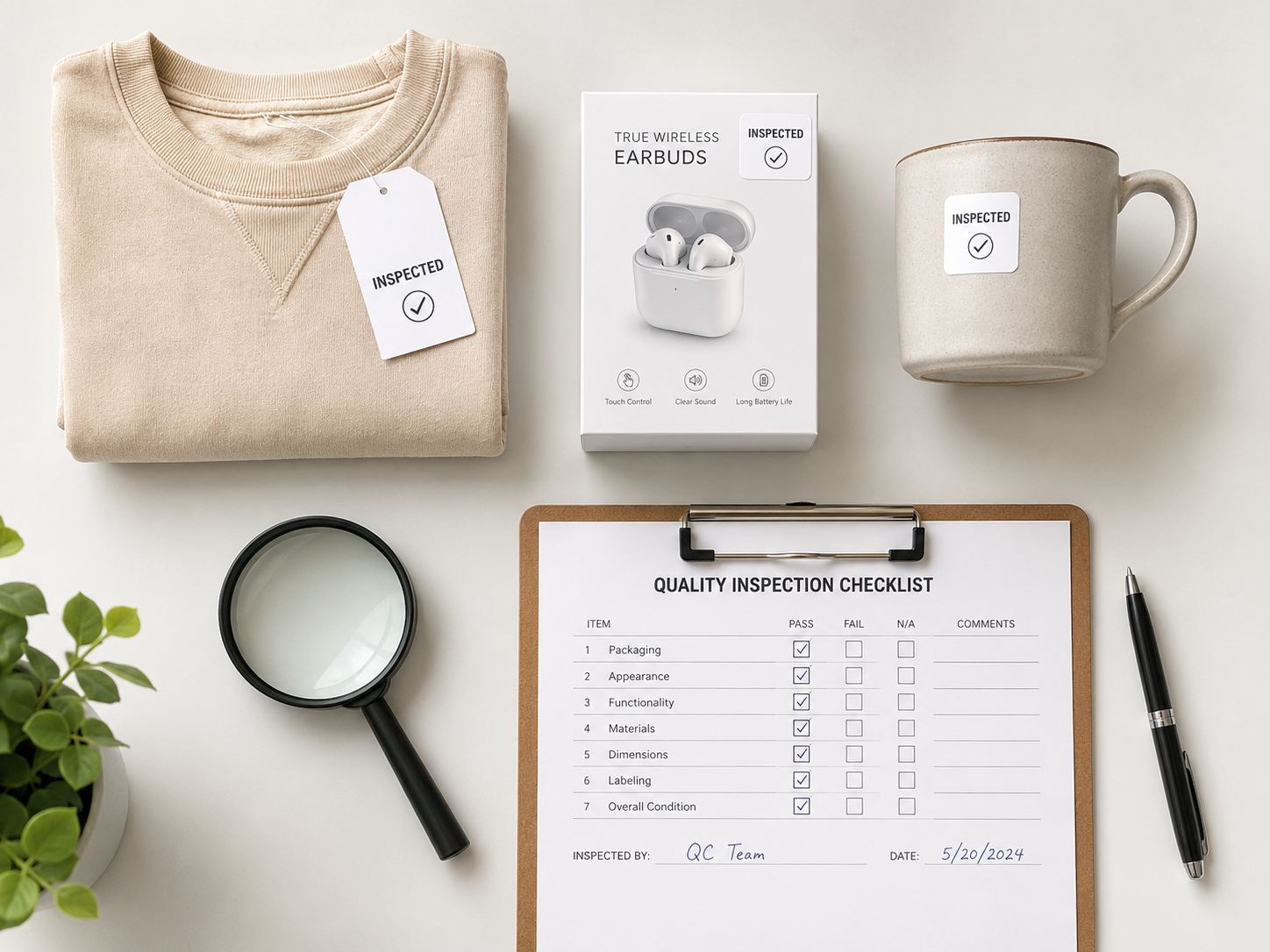
If you have ever sourced products from China at any real volume, you already know the argument. A batch arrives, something is wrong with a portion of it, and now two sides are negotiating over whether the problem even counts as a defect. The buyer says it is unacceptable. The supplier says it is within normal tolerance. Nobody has anything in writing to settle it, so the conversation drags on for days and usually ends with the buyer eating the loss just to move forward.
This is not really a supplier problem. It is a standards problem. Most sourcing relationships never define, in writing, what a defect actually is, category by category, or what happens financially when one is confirmed. Without that, every dispute becomes a negotiation instead of a lookup.
What follows is a real inspection and compensation standard used inside the 1688 ecosystem, built for software providers with official API access to 1688’s supply chain. It was shared with us as part of a service integration, and it is detailed enough that we think it is worth breaking down publicly, because very little like it exists in English.
Why a written standard changes the outcome
A verbal “we’ll refund you if it’s bad” arrangement fails for a simple reason: it leaves the definition of “bad” up to whoever is arguing harder that day. A written, category-based standard removes that ambiguity. It defines, in advance:
| 01 | Which categories of products are inspected and under what checkpoints |
| 02 | What tolerance is acceptable before something is classified as defective |
| 03 | How much compensation applies once a defect is confirmed |
| 04 | What is explicitly excluded, so neither side pretends the coverage is unlimited |
That last point matters more than people expect. A standard with no exclusions is not a real standard, it is a marketing promise. The version we are describing here has clearly defined limits, which is exactly what makes it credible.
When the standard applies
Two conditions gate everything else. First, coverage only applies to products that went through a paid, detailed inspection. Products that skipped inspection are simply outside the scope, there is no fallback claim to make. Second, the buyer needs to submit photo or video evidence when filing a claim, since the compensation decision is made against that evidence, not a description of the problem.
Claim window: 14 days from the day the goods reach the end customer, for shipments not sent directly by the platform itself. For larger orders, that window can be extended by agreement. Outside the window, or without sufficient evidence, a claim may not be honored, even if the underlying complaint is legitimate.
How compensation is actually tiered
This is the part most sourcing arrangements never get right: not every defect deserves the same payout. This standard splits confirmed defects into three tiers based on severity, and pays out per defective unit, not as a blanket refund on the whole order.
| Issue Type | Compensation |
|---|---|
| Severe Wrong item shipped / mismatched spec |
Full order value + international freight |
| Major Stains, structural damage, mold, broken zippers/buttons, non-compliance |
Full order value of the defective units |
| Minor Loose threads, color inconsistency, odor, small workmanship misses |
3x the inspection fee for that item |
Compensation is calculated per confirmed defective unit, not as a full-order refund. If 8 units out of 200 fail inspection, only those 8 are compensated.
The category-by-category checklist
This is where the standard actually earns its credibility. Instead of one generic “quality check,” inspection criteria are broken down by product category, with specific, checkable thresholds rather than subjective judgment calls.
Apparel
3C & Electronics
Home & Household
Apparel
Apparel inspection is the most granular of the three categories, and covers far more than a visual glance:
- Quantity and packaging — count matches the order, items are unpackaged and laid flat for inspection
- Style and color match — checked against the reference SKU, not just “close enough”
- Construction — collar shape, twisting, uneven weave, print defects (yellowing, bleeding, missing print, cracking)
- Fabric — composition matches the listed SKU, no visible pilling, fraying, or cheap synthetic feel
- Odor — no mold or chemical smell
- Measurements — shoulder width, length, chest, sleeve, waist, and inseam each have a defined tolerance, typically 2–3cm depending on the measurement
- Stitching and seams — no loose threads, broken stitching, puckering, or seam separation
- Hardware — buttons and zippers checked for rust, corrosion, plating wear, or functional failure

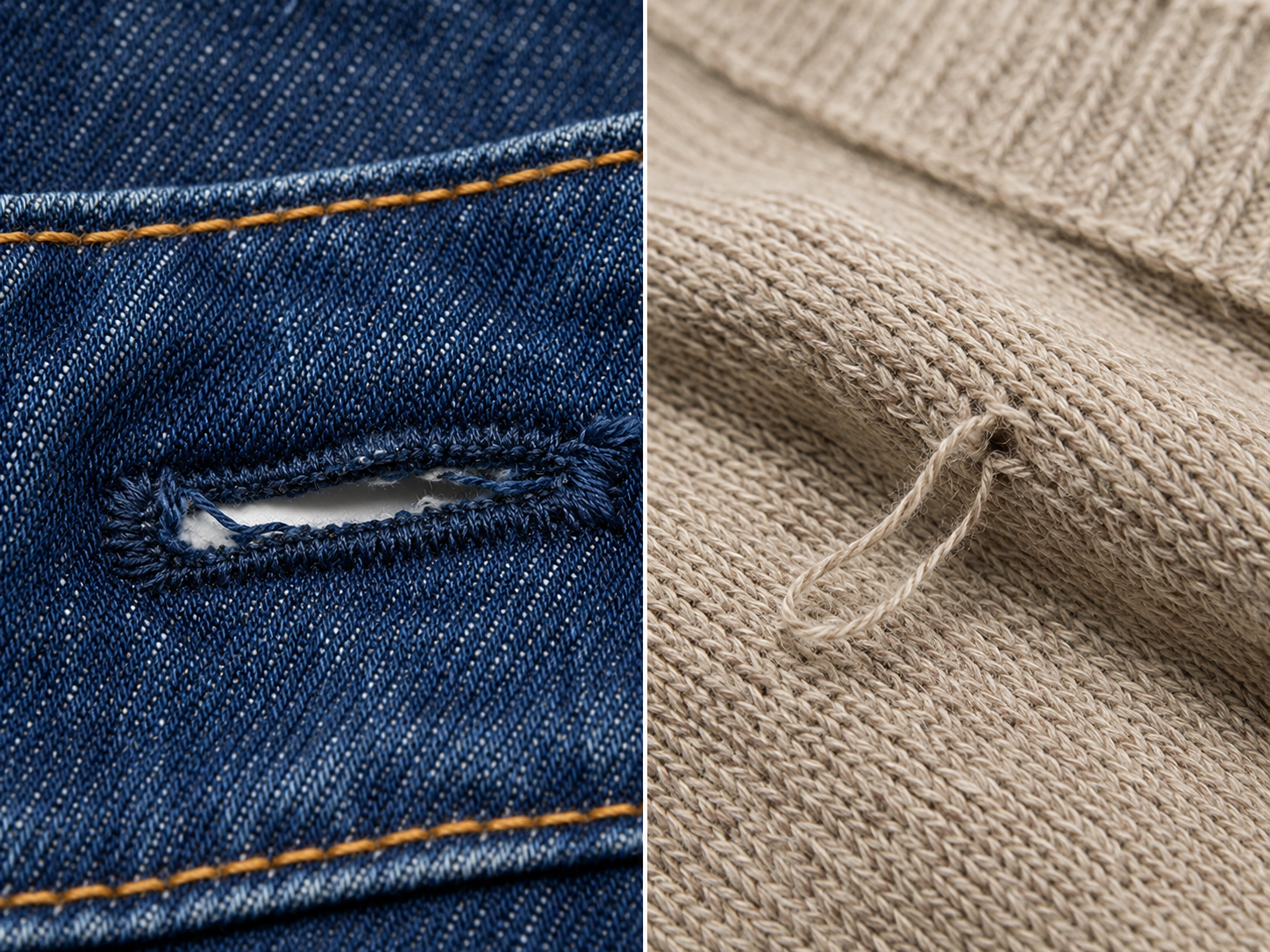
Two very specific line items stand out because they are common real-world failure points: unstitched buttonholes on jeans, and hidden loose threads on knitwear tucked where a quick glance won’t catch them. Both are called out individually rather than buried under a general “check the stitching” instruction, which tells you this checklist was built from actual claim history, not a generic template.
3C & Electronics
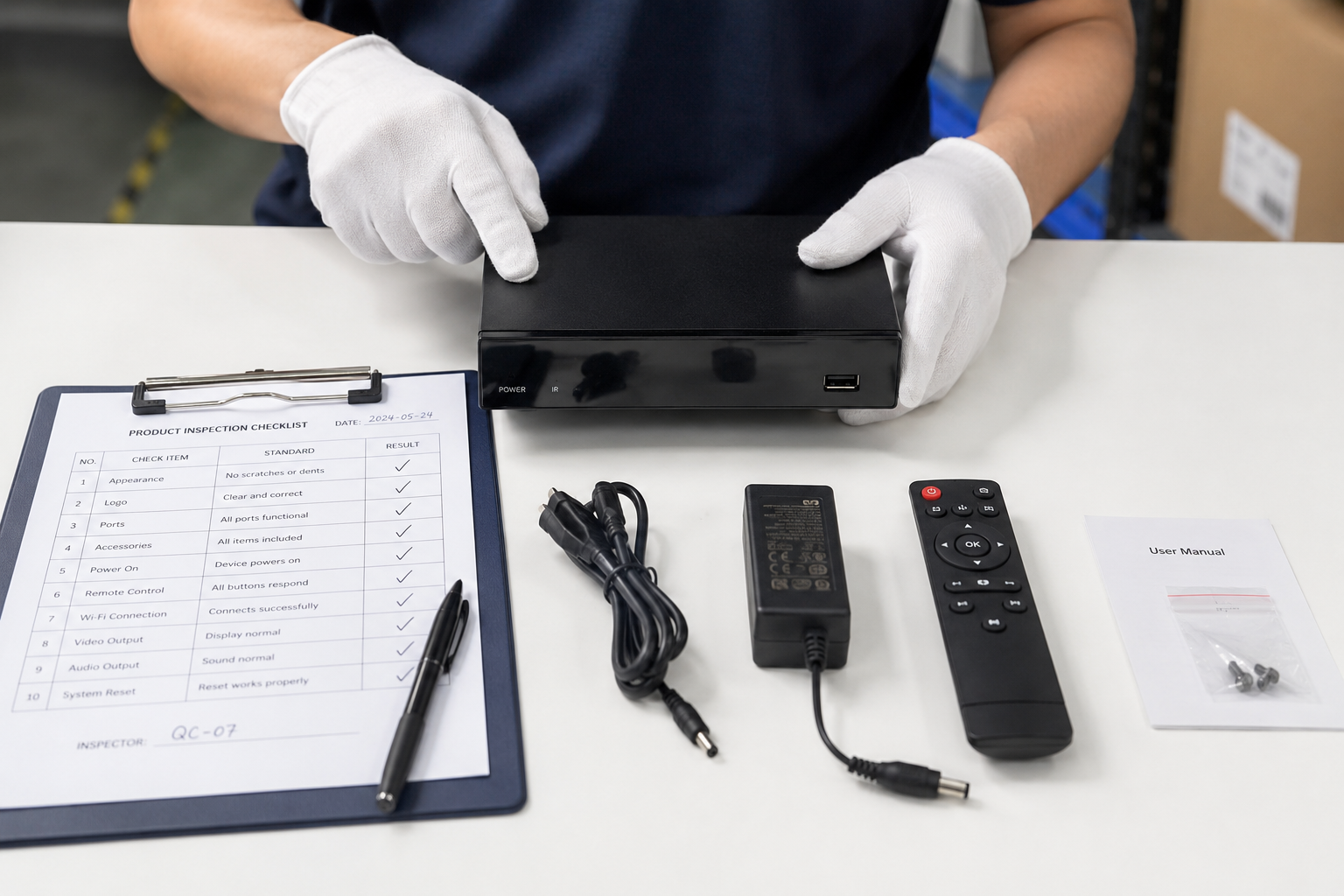
Electronics inspection is narrower but stricter, since defects here are more binary than apparel’s spectrum of acceptable variation:
- Quantity — arrival count matches the order
- External condition — packaging damage, stains, scratches, deformation, or dead pixels on any screen
- Spec match — bundle completeness, dimensions, color, and specification all checked against the order, with mismatches treated the same as a wrong-item shipment (full value plus freight)
- Accessories — power cables, adapters, USB cables, remotes, all verified present and matching
Home & Household Goods
This category covers the widest range of materials and use cases, so the checklist spans structural, functional, and safety concerns:
- Structure — wood, metal, and plastic components checked for flatness, cracking, warping, or deformation
- Color and finish — paint, coating, and print checked for inconsistency; a genuine color mismatch is treated as a mismatched-spec claim (full value plus freight), while uneven shading is treated as a minor defect
- Fragile items — no cracks, air bubbles, or rough edges
- Moving parts — drawers, hinges, tracks, and folding mechanisms tested for smooth operation
- Stability — assembled furniture checked for wobbling or tilting
- Safety and compliance — no chemical odor from plastics, rounded edges where cuts are possible, no exposed screws or nails
- Hardware and spare parts — screws, bolts, and assembly tools present and complete; spare screws or padding included where the design calls for them

Special categories, such as jewelry, eyewear, multi-part assembly items, electrical goods, and multi-material products, fall outside this general checklist and are inspected under separate, item-specific criteria.
What is not covered
Any inspection standard that promises to cover everything should raise suspicion. This one is explicit about its limits, which is exactly why it holds up:
- Natural degradation from warehouse storage beyond one month — discoloration on light-colored goods, metal rust, mildew, compression marks, or fading from long-term stacking, and inherent material odor
- Button color variation
- Chinese-language text on packaging or accessory materials, unless a paid relabeling or repackaging service was purchased
- Barrier-sealed packaging on items without a purchased inspection add-on — only an unopened exterior check is performed, and anything hidden by the seal cannot be judged
- Claims with insufficient evidence, or where investigation confirms the issue was not an inspection oversight
This is the section most sourcing content skips entirely, because exclusions do not sound as reassuring as coverage. But from a buyer’s perspective, this is the part that tells you whether a standard was written by people who actually process claims, or by a marketing team.
What this means if you’re sourcing at scale
None of this is complicated once it is written down, and that is exactly the point. If you are running a dropshipping operation, a consolidation business, or your own reverse-daigou storefront, the difference between a good sourcing partner and a frustrating one usually is not price. It is whether disputes get resolved against a standard, or against whoever argues longer.
This is also why API-level integration matters more than most buyers realize. When inspection status, defect classification, and compensation data are pulled directly through a platform’s supply chain API rather than relayed manually through chat messages, disputes get resolved against a record instead of a memory. At GullTrans, this is the layer we build our fulfillment and consolidation workflows around, so quality data does not get lost between the factory floor and your customer’s doorstep.